

Facial contouring surgery program
This is a surgical procedure aimed at improving facial proportions and creating better balance, especially in individuals with square faces, high cheekbones, or wide jaws, which can make the face appear harsh, disproportionate, or lacking softness. This type of surgery typically includes cheekbone reduction and jawline reduction. In some cases, a combination of these procedures may be necessary to achieve a more natural-looking result that complements the patient’s facial features.
Types of Facial contouring surgery program
Choosing the appropriate type depends on each individual's needs and facial structure. Generally, chin surgery can be categorized as follows:
Chin augmentation external wound
This procedure involves making an incision under the chin to insert a medical-grade silicone implant into the appropriate position. The advantage is that the doctor can clearly see the chin structure and make precise adjustments. However, the disadvantage is that a scar may form, depending on each individual's skin condition.
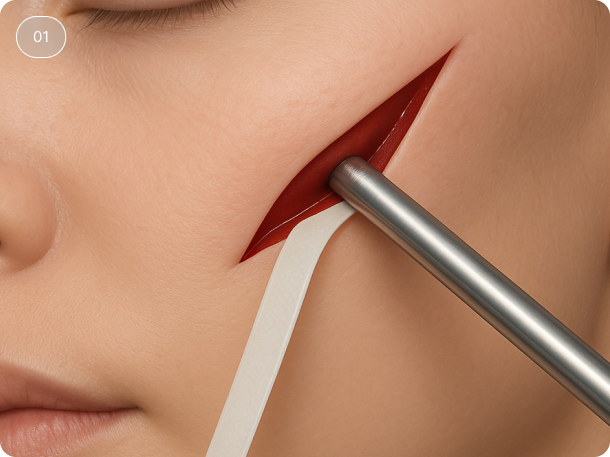
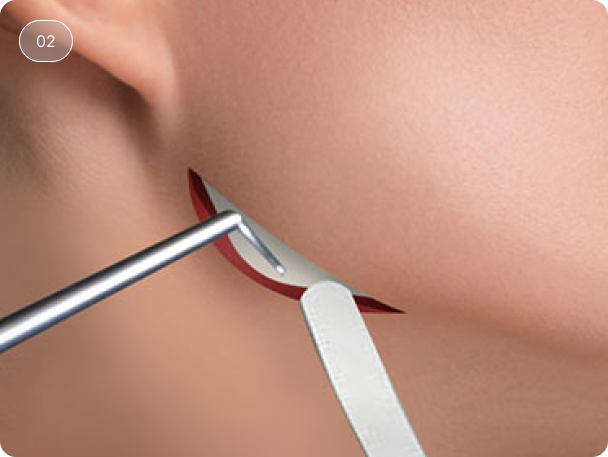
Chin augmentation internal wound
This procedure involves making an incision inside the mouth, resulting in no scarring and a more natural appearance. Healing is faster than external incisions, but it requires specialized skill from the surgeon to correctly place the silicone implant and ensure it fits the facial structure.
Preparation before undergoing the procedure Facial contouring surgery program
/1
Please provide complete health information.
If you have any underlying medical conditions or are taking certain medications, please inform your doctor in advance so they can assess any potential impact.
/2
Avoid medications that increase blood clotting.
Avoid taking blood thinning medications or drugs that affect blood clotting, such as aspirin.
/3
Avoid supplements.
Refrain from taking any supplements and vitamins for at least one month.
/4
Quit smoking.
And alcoholic beverages for two weeks.
Post-instructions surgery
- Avoid chewing hard foods or foods that require forceful chewing during the first 1-2 weeks.
- Avoid any impact or trauma to the cheekbones and jaw, especially during the first 3–4 weeks.
- Follow your doctor's instructions and attend your follow-up appointments.
- Maintain good oral hygiene by using mouthwash recommended by your dentist.

The process do surgery
- Duration: The surgery takes no more than 3 hours.
- Anesthesia/Numbing: Anesthesia is administered by an anesthesiologist.
- Surgical procedure: X-ray of the skeleton to accurately determine the shape of the cheekbone, the location of the nerves in the area, and to pinpoint the surgical site.
- Hospital stay: The patient needs to rest in a patient room for one night.
- Hospital follow-up: Come for a follow-up appointment with your doctor 5-7 days after surgery.