


Rhinoplasty program
Rhinoplasty is considered one of the cosmetic surgery programs
that can significantly enhance facial features,
especially for those who want to boost their self-confidence.
Currently, there are various techniques and materials available for rhinoplasty,
depending on the suitability and specific problems of each individual.
There is a wide variety of materials available for nasal augmentation.
Each style affects the shape, feel, and The naturalness of the results.
The options for materials used in rhinoplasty can be divided into several types.
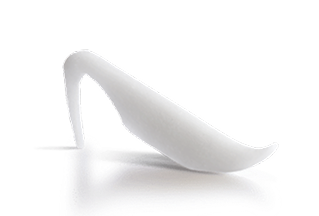
Silicone Ready-made
Pre-shaped and easy to use.
Minimal warping or tilting.
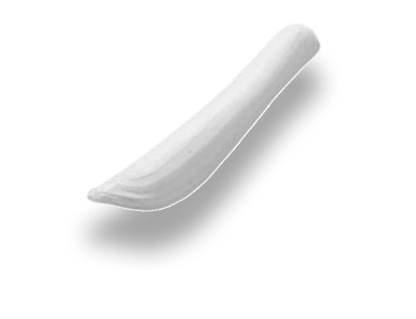
Silicone Sharpen it yourself
It comes in stick form, which the doctor will sharpen to fit the face shape and address individual needs.
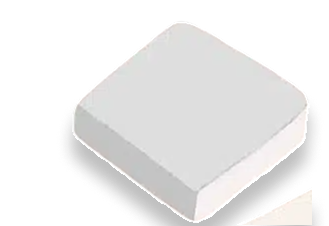
Cartilage From the body.
- Behind the ear: Very popular because it gives a natural result.
- Ribs: Suitable for severe cases requiring a prominent, elongated shape.
- Tailbone: Used in some cases where reinforcing material is required.
Gore-Tex
Highly flexible medical-grade material.
Very natural and adheres well to tissue.
How many types of rhinoplasty techniques are there What's the difference?
There are three main techniques for rhinoplasty, and the doctor will choose the one that best suits each individual’s facial structure and needs.

Open rhinoplasty
This method involves an incision inside the nasal cavity, small in size at approximately 1-1.5 cm. The procedure takes about 1-2 hours and uses local anesthesia. It is suitable for cases that do not require significant internal structural modification. The advantages include quick recovery and no visible scar.
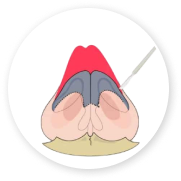
Closed rhinoplasty
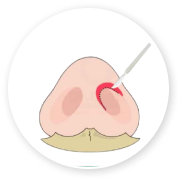
This involves making a small incision at the base of the nose to allow the doctor to clearly see the internal structures. It's suitable for cases requiring significant modification, such as revision rhinoplasty or extending the tip to make it more prominent.
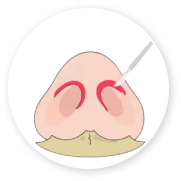
Semi-open surgery
This technique involves making incisions around both nostrils, allowing the doctor to see the internal structures more clearly than with a closed technique, but not as clearly as with an open technique. This technique helps to refine the tip of the nose, making it more slender and pointed.

process do surgery
Nose surgery is divided into three main techniques: closed technique, open technique, and semi-open technique. Each technique has different procedures, as follows:
01
Closed Rhinoplasty
The surgery takes approximately 1-2 hours. The doctor will administer a local anesthetic to the surgical area, make an incision inside the nostril, reshape the nasal structure as planned, and close the incision with dissolvable sutures, which do not require removal afterward.
02
Open Rhinoplasty
The surgery takes approximately 1-2 hours. The doctor will administer a local anesthetic to the surgical area, make an incision inside the nostril, reshape the nasal structure as planned, and close the incision with dissolvable sutures, which do not require removal afterward.
03
Semi Open
The surgery takes approximately 1-2 hours. The surgeon will make small incisions around both nostrils, but without the external incisions seen in open techniques. They will then reshape the nasal structure, insert necessary materials as needed, close the incisions, and use a nasal splint to maintain the shape.
Get ready
Before entering the operating room
Pre-surgical preparation is crucial as it helps reduce complications during surgery and leads to safer and more effective outcomes.
- Inform your doctor in detail about any underlying medical conditions or medications you regularly take.
- Avoid supplements, herbs, and vitamins for at least one week.
- Abstain from alcohol for 2-4 weeks and quit smoking for 1 month in advance.
- Avoid fermented foods and seafood.
- For open surgery, refrain from eating and drinking for at least 6-8 hours before the procedure.
